How do student portfolios support authentic assessment and deeper learning?
Student Portfolios as Tools for Authentic Assessment
Tests can measure what a student knows in a single moment, but portfolios can reveal growth, progress, reflection, and learning over time.
As classrooms continue shifting toward more student-centered and meaningful learning experiences, student portfolios are becoming an increasingly valuable tool for authentic assessment. Instead of focusing only on grades or test scores, portfolios allow students to demonstrate understanding through real work, revisions, projects, reflections, and ongoing skill development.
Portfolios also give teachers a broader picture of student learning. They can highlight creativity, critical thinking, problem-solving, goal-setting, and progress in ways traditional assessments often cannot capture on their own.
At their best, student portfolios help move assessment beyond “What score did this student earn?” and toward a more meaningful question: “How has this student grown as a learner?”
What Is a Student Portfolio?
A student portfolio is a purposeful collection of student work that highlights learning, growth, skill development, and reflection over time. Unlike a single test or assignment, portfolios provide a broader view of how students think, create, revise, and apply what they have learned across different experiences and subjects.
Student portfolios may showcase:
progress toward learning goals and standards
growth in academic skills over time
critical thinking and problem-solving
reflection and self-assessment
creativity, voice, and individuality
Portfolios can be physical or digital and often include a variety of learning artifacts, such as:
writing samples
projects and presentations
artwork or creative work
science investigations
self-reflections and goal-setting activities
teacher feedback and peer feedback
photos, videos, audio recordings, or other multimedia elements
When thoughtfully designed, portfolios help students become more active participants in documenting and reflecting on their own learning.
Why Use Portfolios for Authentic Assessment?
1. They Show Learning in Context
Portfolios allow students to demonstrate how they apply knowledge and skills across different assignments, projects, and learning experiences. Instead of focusing only on memorization or performance on a single test, portfolios provide a fuller picture of student understanding.
2. They Highlight Growth Over Time
One of the greatest strengths of portfolios is their ability to document progress. Students can see how their work improves through practice, revision, reflection, and feedback. Teachers and families are also able to recognize growth that may not always be visible through traditional grading alone.
3. They Empower Student Voice and Reflection
Portfolios encourage students to take a more active role in their learning. When students select work samples, reflect on challenges, and explain their thinking, they build self-awareness, confidence, and ownership of their progress.
4. They Support Differentiated Assessment
Not all students demonstrate learning in the same way. Portfolios provide multiple opportunities for students to showcase understanding through writing, presentations, creative projects, multimedia, discussions, artwork, or hands-on tasks.
This flexibility can be especially supportive for multilingual learners, students with disabilities, and students who may not perform well on traditional tests despite strong understanding of content.
5. They Can Support Promotion and Advancement Decisions
In some schools and programs, portfolios are also used as part of promotion or transition requirements between grade levels. Rather than relying solely on test scores, portfolio reviews may help educators evaluate whether students are demonstrating readiness through consistent work, growth, skill development, and completion of learning standards over time.
This approach can provide a more balanced and comprehensive view of student progress, especially when combined with teacher observations, classroom performance, and student reflection.
6. They Prepare Students for Real-World Expectations
In college, careers, and many creative or technical fields, people are often expected to present a body of work that demonstrates skills, experience, and growth. Student portfolios mirror this real-world process by helping learners organize, present, and reflect on their accomplishments over time.
Common Types of Student Portfolios
Student portfolios can look very different depending on the grade level, subject area, and purpose of the assessment. Some portfolios focus on growth over time, while others highlight mastery, creativity, or student reflection.
Here are a few common approaches educators use:
Growth Portfolios
Growth portfolios document student progress across weeks, months, or even an entire school year. These portfolios often include early work samples alongside later revisions or improved assignments so students and teachers can clearly see development over time.
Showcase Portfolios
Showcase portfolios highlight a student’s strongest or most meaningful work. Students are often encouraged to select pieces they feel proud of and explain why those examples represent their best effort, creativity, or learning.
Competency or Mastery Portfolios
These portfolios focus on demonstrating proficiency in specific skills or standards. Teachers may use them to show evidence of student mastery in areas such as writing, reading comprehension, scientific reasoning, or project-based learning outcomes.
Reflective Portfolios
Reflective portfolios place a stronger emphasis on student thinking and self-assessment. Students may write about challenges they faced, goals they achieved, strategies that helped them improve, or areas where they still want to grow.
In many classrooms, educators combine elements from multiple portfolio types to support different learning goals and give students more meaningful ways to demonstrate understanding.
What Student Portfolios Can Look Like Across Grade Levels
Student portfolios evolve as learners grow. In younger grades, portfolios often focus on foundational skills and simple reflections, while older students may use portfolios to demonstrate deeper analysis, independence, and real-world application.
Elementary School
In elementary classrooms, portfolios often capture early growth, creativity, and foundational skill development. Students may include drawings, writing samples, reading recordings, photos of classroom projects, or simple reflection activities explaining what they enjoyed or felt proud of.
Digital tools such as Seesaw or Google Slides can also help younger students share learning with families in accessible and engaging ways.
At this level, portfolios often emphasize progress, participation, effort, and confidence-building alongside academic growth.
Middle School
As students move into middle school, portfolios often become more reflective and skill-based. Students may collect revised essays, multimedia projects, science investigations, math explanations, or collaborative assignments that demonstrate both learning and growth over time.
Reflection also becomes increasingly important during these years. Students may begin evaluating their own work, setting goals, or responding to peer and teacher feedback as part of the portfolio process.
Middle school portfolios frequently highlight critical thinking, collaboration, communication, and growing independence as learners.
High School
High school portfolios often focus on mastery, deeper analysis, and preparation for college, careers, or future opportunities. Students may include research papers, presentations, creative projects, coding assignments, career exploration activities, internships, or capstone experiences.
In some schools, portfolios may also be used during exhibitions, presentations, or promotion and graduation reviews to demonstrate readiness and achievement across multiple areas.
At this level, portfolios can help students connect classroom learning to real-world skills while also encouraging reflection, self-direction, and long-term goal-setting.
Getting Started With Student Portfolios
Student portfolios do not need to be complicated, time-consuming, or perfectly designed from the start. In many classrooms, portfolios begin with just a few intentional pieces of student work collected consistently over time.
The goal is not to save everything students create. Instead, portfolios should help document growth, reflection, skill development, and meaningful learning experiences.
Here are a few practical ways educators can begin using portfolios in the classroom:
1. Start Small
Teachers do not need an elaborate portfolio system immediately. Starting with one subject, one grading period, or one recurring assignment can make the process much more manageable.
For example, students might:
save one writing piece each month
track revisions from rough draft to final draft
record reading fluency growth over time
reflect on one project per unit
collect examples of problem-solving in math or science
Small routines are often easier to maintain consistently than large portfolio systems introduced all at once.
2. Choose a Format That Fits Your Classroom
Some classrooms work best with digital portfolios, while others benefit from physical folders or binders students can organize themselves.
Digital platforms such as Google Slides, Seesaw, Padlet, or Canva, can make it easier for students to upload work, add reflections, and share progress with families.
Physical portfolios may work especially well for younger students, hands-on projects, artwork, or classrooms where screen time is intentionally limited.
The best portfolio system is usually the one teachers and students can realistically maintain throughout the school year.
3. Help Students Reflect on Their Learning
Reflection is often what transforms a collection of assignments into an authentic portfolio.
Encouraging students to think about their progress helps build self-awareness, goal-setting, and ownership of learning. Reflections do not need to be lengthy or formal to be meaningful.
Students might respond to prompts such as:
What are you most proud of in this work?
What challenged you during this assignment?
How did your skills improve over time?
What would you like to continue working on?
Even short reflections can provide valuable insight into student thinking and growth.
4. Use Portfolios During Conferences and Classroom Discussions
Portfolios can become powerful tools during parent conferences, student-led conferences, IEP meetings, or informal classroom discussions about progress.
Instead of relying only on grades or test scores, teachers and students can review actual examples of learning, growth, revision, creativity, and effort over time.
Portfolios can also help students communicate their strengths more confidently while identifying goals for continued growth.
5. Focus on Growth, Not Perfection
Student portfolios are most effective when they reflect authentic learning experiences, including mistakes, revisions, challenges, and improvement over time.
A portfolio does not need to showcase only perfect work. In many cases, the most meaningful learning comes from helping students recognize how far they have progressed.
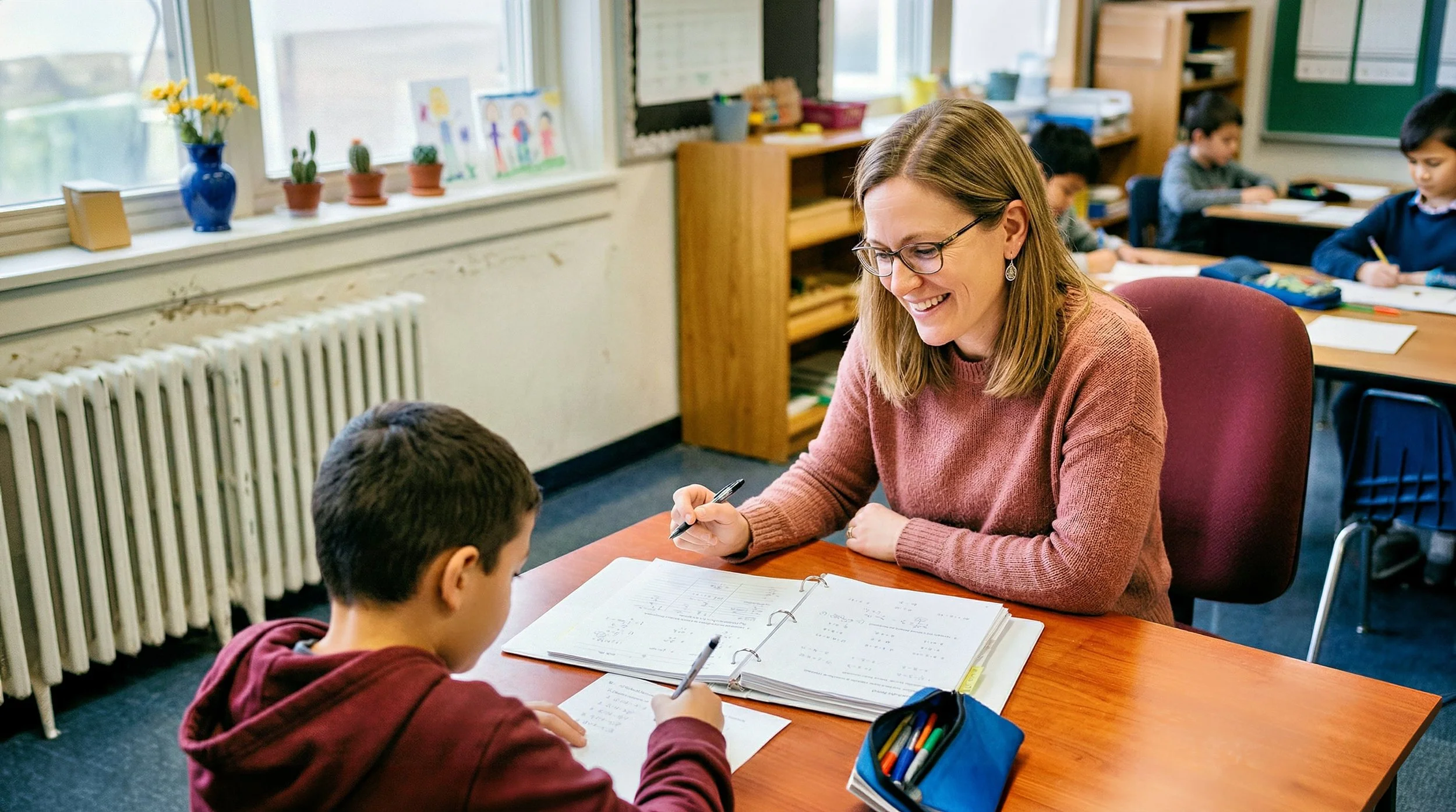
Student portfolios should help document growth, reflection, skill development, and meaningful learning experiences.
Common Challenges With Student Portfolios
Like any classroom system, portfolios can take time to build and maintain consistently. Some students may need extra support with reflection, organization, or selecting meaningful work samples. Digital access and platform management can also create challenges in some classrooms.
Starting small often makes the process more manageable. Many teachers begin with one subject, one grading period, or a few recurring assignments before expanding portfolio use over time. Clear reflection prompts, simple routines, and flexible portfolio formats can also help students participate more successfully.
Building a School Culture That Supports Student Portfolios
Student portfolios are often most effective when they are supported consistently across classrooms and grade levels rather than used as isolated classroom projects. In some schools, portfolios even play an important role in promotion decisions, exhibitions of learning, graduation pathways, or demonstrating readiness for the next grade level.
Because of this, administrator support can make a significant difference in how meaningful and sustainable portfolio systems become over time.
School leaders can support portfolio implementation by:
providing time for teachers to collaborate and plan
offering professional learning and shared expectations across grade levels
creating consistent reflection or portfolio structures students can build on each year
highlighting student portfolios during conferences, showcases, exhibitions, or school events
encouraging portfolios as part of student growth conversations rather than relying only on test scores
When portfolios become part of a school’s broader learning culture, students are given more opportunities to demonstrate growth, reflect on progress, and show readiness in ways that feel more authentic and comprehensive than a single assessment alone.
Looking Beyond Test Scores
Student portfolios provide a more complete picture of learning than a single test or assignment ever could. They allow students to demonstrate growth, reflect on progress, and showcase understanding through meaningful work collected over time.
By documenting progress across multiple experiences and assignments, portfolios can help educators better understand student readiness, skill development, and long-term growth.
Looking for Ready-to-Use Resources?
If you found this article helpful, you may also enjoy the classroom toolkits, e-books, templates, and educator resources available in the Collective Learning Shop.